
Communicate outdoors. Connect worldwide.
DL5OTT
Field radio adventures
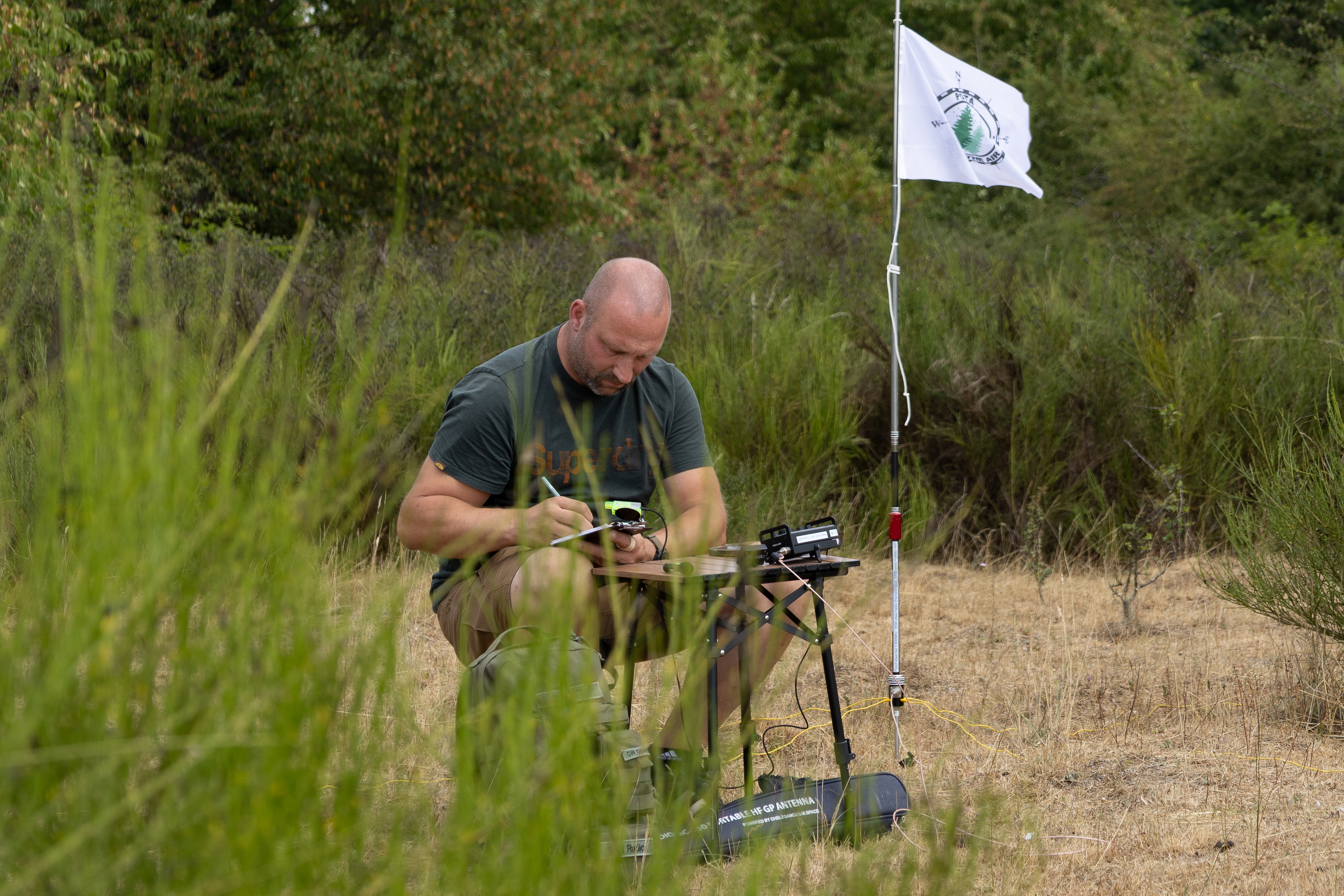
Who is this guy?
About DL5OTT
My name is Bastian Ott, and I’m an amateur radio operator with the call sign DL5OTT. I live in the Nuremberg metropolitan area—in Oberasbach, to be exact—and I’m passionate about amateur radio, especially shortwave, Morse code (CW), and portable operations.
My journey into amateur radio began in April 2024 with a Class E license and my old call sign DO1OTT. Just a few months later, in September 2024, I upgraded to a Class A license. Since then, I’ve spent every spare minute trying out new antennas, upgrading my equipment, and making radio contacts with stations all over the world.
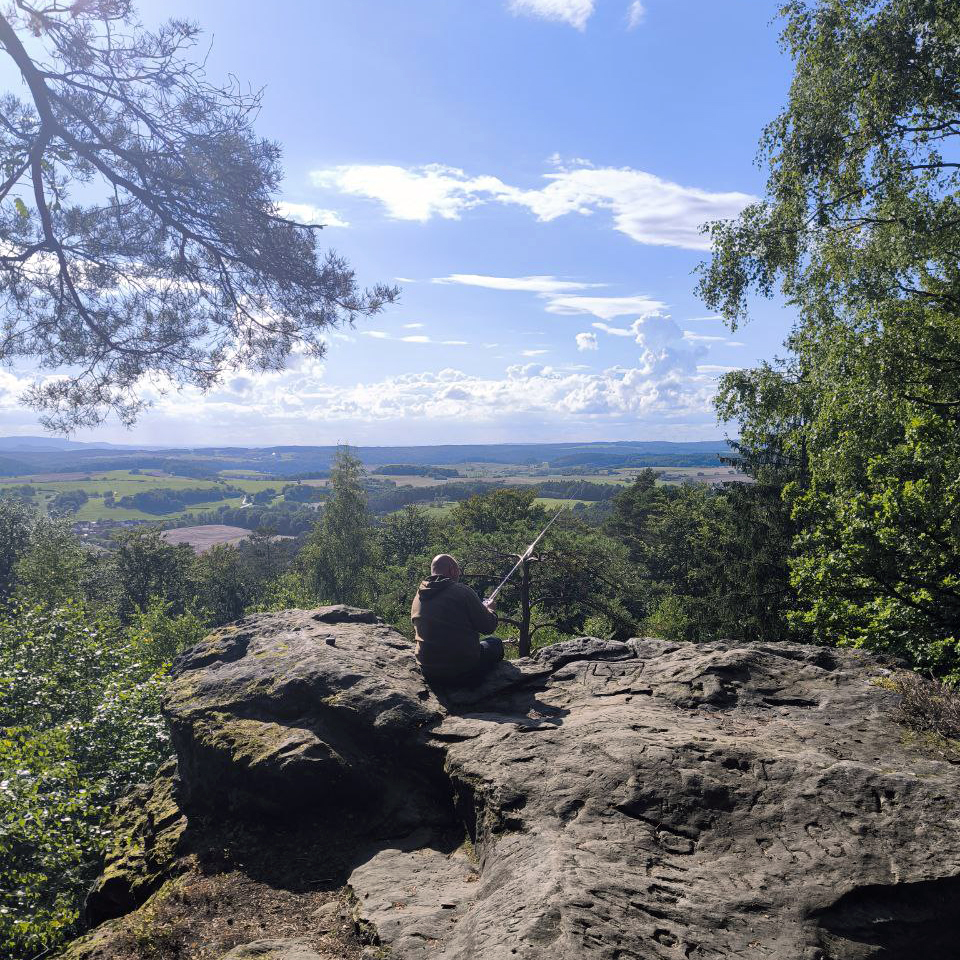
I especially enjoy operating on the go, whether through Parks on the Air (POTA) or simply in beautiful natural settings. I’m fascinated by the possibility of making worldwide connections with relatively simple equipment and improvised antennas. But I also enjoy operating from home, where I’m just as active.
Today, the vast majority of my radio contacts take place using Morse code (CW). For me, CW is far more than just a mode of operation. The rhythmic interplay of dots and dashes, the characteristic sound of the signals, and the focus on the essentials have a meditative quality. After a long day, it’s a wonderful way for me to unwind. Every contact is unique and reminds me that people all over the world can be connected using simple means.
For me, amateur radio isn’t just about technology—it’s above all about international friendships, mutual support, and connecting with people from all over the world.
On this website, I’d like to give you a glimpse into this wonderful and incredibly diverse hobby.
Another hobby and passion of mine is the volunteer fire department.
Thank you very much for visiting. Maybe we’ll hear each other soon on one of the amateur radio bands.
Tnx es 73, de Bastian – DL5OTT
What hath God wrought?
— Samuel Morse, 1844
Faszination & Tradition
Morse code (CW)
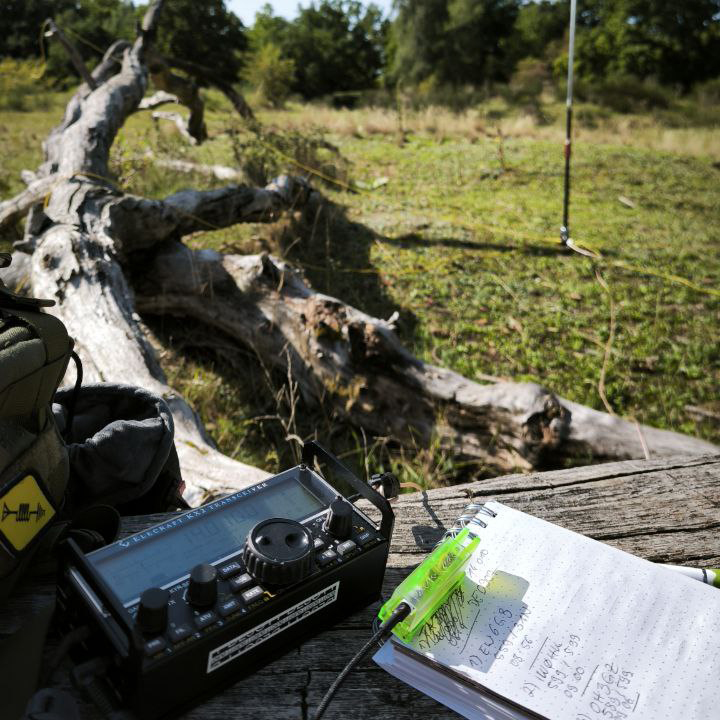
Morse code is much more than just a historical code. Since its development by Samuel Morse and Alfred Vail in the 19th century, it has made it possible to transmit messages using only short and long signals—the famous dots and dashes. What once revolutionized global telegraphy lives on today in amateur radio. With surprisingly little technology, reliable connections can be established even over thousands of kilometers—even under conditions where voice communication has long since reached its limits.
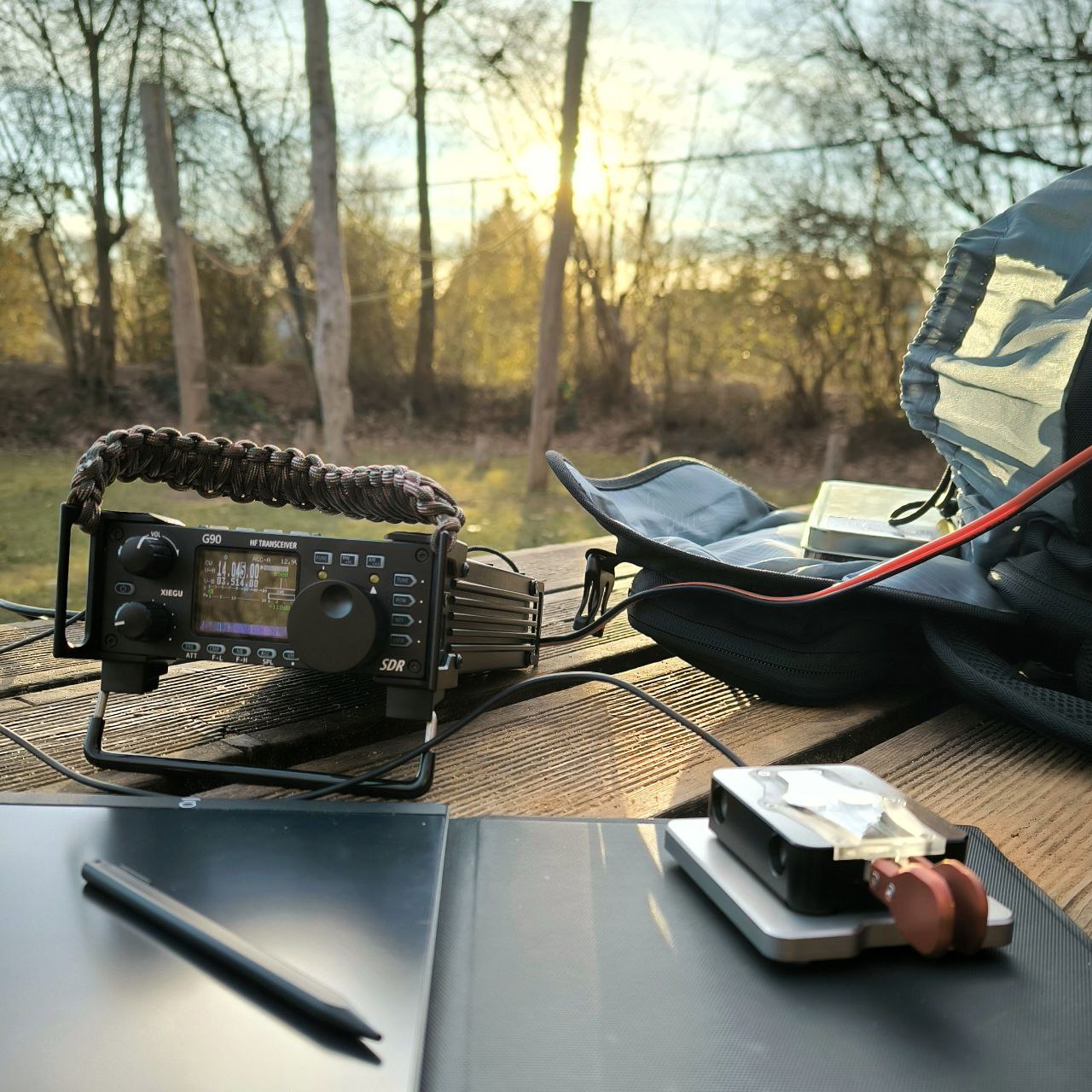
For me, CW is more than just a mode of operation—it’s a feeling. As soon as the first dots and dashes come out of the speaker, a sense of calm settles in. The steady sounds, the full concentration on the other person’s call sign, and the joy of a successful connection make every contact something special. Perhaps that’s exactly why Morse code never ceases to fascinate me: it slows things down, connects people across continents, and shows that communication can work even with the simplest of means.
Morse Code as Intangible Cultural Heritage
“What hath God wrought?” With these words, Samuel Morse made history on May 24, 1844. It was the first official message transmitted via Morse code over a telegraph line from Washington to Baltimore—the beginning of a new era of global communication.
More than 180 years later, this special form of communication lives on. Since 2014, Morse telegraphy has been officially listed in Germany’s National Register of Intangible Cultural Heritage. This recognition honors not only its historical significance but also the dedication of thousands of amateur radio operators who continue to preserve this unique cultural practice to this day and pass it on to future generations.
What once connected continents, ships, and railroads now connects people all over the world. Despite state-of-the-art technology, Morse code has lost none of its fascination. With nothing more than dots, dashes, and a little practice, friendships are formed across language and national borders. For many, CW is therefore far more than just a mode of operation—it is a living tradition, a passion, and a piece of living history.
The Alphabet in Morse Code
A ·− B −··· C −·−· D −·· E · F ··−· G −−· H ···· I ·· J ·−−− K −·− L ·−·· M −− N −· O −−− P ·−−· Q −−·− R ·−· S ··· T − U ··− V ···− W ·−− X −··− Y −·−− Z −−··
Numbers in Morse Code
1 ·−−−− 2 ··−−− 3 ···−− 4 ····− 5 ····· 6 −···· 7 −−··· 8 −−−·· 9 −−−−· 0 −−−−−
Punctuation Marks in Morse Code
. ·−·−·− , −−··−− ? ··−−·· ! −·−·−− / −··−· ( −·−−· ) −·−−·− & ·−··· : −−−··· ; −·−·−· = −···− + ·−·−· – −····− _ ··−−·− ” ·−··−· @ ·−−·−·
I would imagine that if you could understand Morse code, a tap dancer would drive you crazy.
— Mitch Hedberg
From the field
POTA
Parks on the air
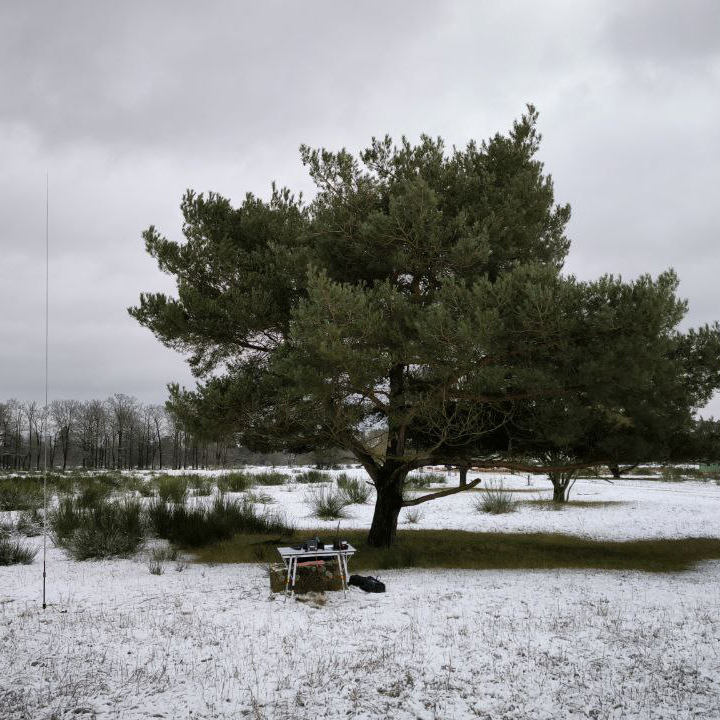
Parks on the Air (POTA) is a global amateur radio program that combines radio operations with experiencing nature. Amateur radio operators visit national parks, nature parks, and other selected protected areas to set up their stations there and conduct so-called activations. After setting up the antenna, they call “CQ POTA”—and within minutes, amateur radio operators from all over the world often respond. These so-called “hunters” try to work as many parks as possible while the activators bring the respective park on the air. This results in unique radio connections that link people across countries and continents—often with nothing more than a backpack full of radio equipment.
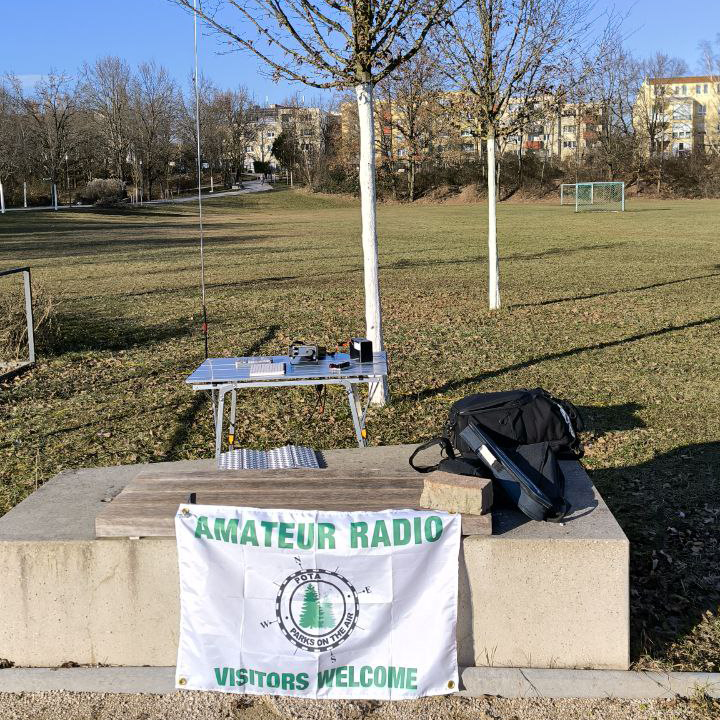
Activator
Every activation begins with finding a suitable location within a registered POTA park. After setting up the antenna and radio station, at least 10 radio contacts are required for the activation to count officially. Every activation is different—and that’s exactly what makes it so special.
Hunter
Hunters are amateur radio operators who search for active POTA stations and make radio contacts with them. The great thing about it is that any amateur radio operator can be a hunter. Registration with POTA is not required—all you need to do is make contact with an active POTA station. However, anyone who wishes to can register on the POTA website and earn awards. But even without registration, one thing matters most of all: the joy of making radio contacts.
More than radio
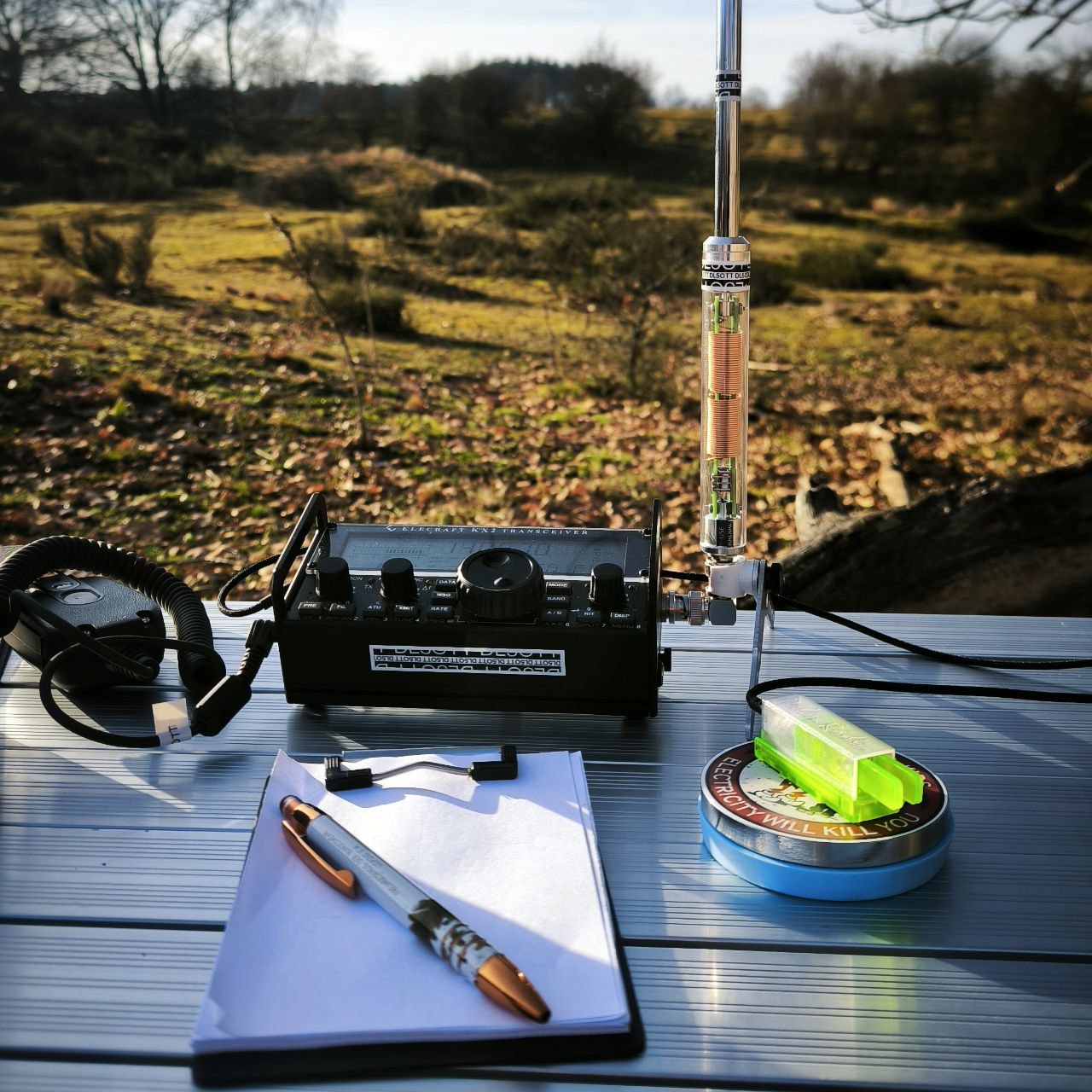
For me, POTA means much more than just points and statistics. It’s a combination of nature, technology, and adventure. Every new location, every improvised antenna, and every contact tells its own story. Especially when combined with Morse code, it gives me a sense of peace and freedom—far removed from everyday life, yet connected to the whole world.
Have I done the world good, or have I added a menace?
— Guglielmo Marconi
Portable essentials
Equipment
TRANSCEIVER
From QRP to 100W
For my outdoor and POTA activities, I use various transceivers—depending on the situation and my needs.
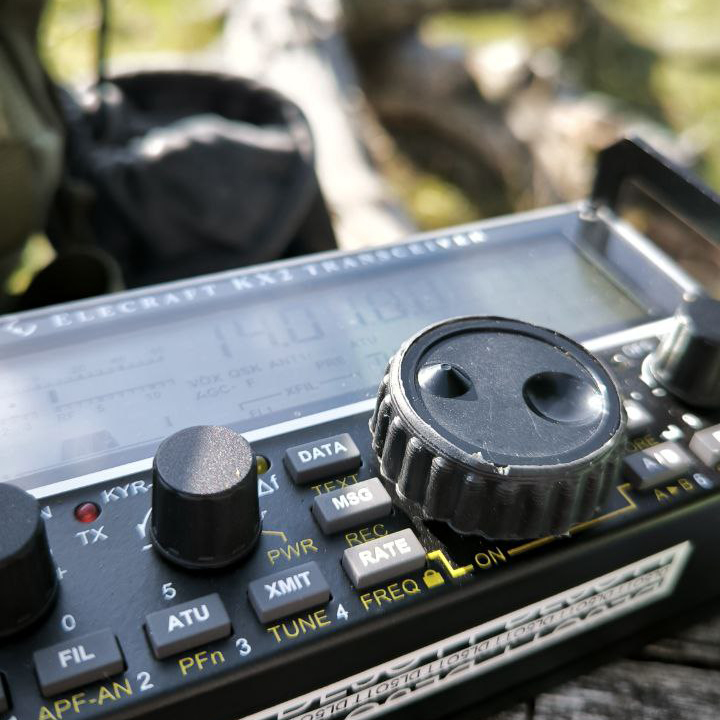
Elecraft KX2
My compact companion for traveling light. The KX2 impresses with its light weight, low power consumption, and excellent reception. Perfect for QRP operation out in nature, especially on CW.
Yaesu FT-857D
The versatile all-rounder for portable operations. With shortwave, 2 m, 70 cm, and up to 100 watts of output power, it offers maximum flexibility when a little more power is needed.
Xiegu G90
A compact SDR transceiver with a built-in antenna tuner. Ideal for spontaneous outings, various antennas, and flexible use on the go.
Three devices—three applications: from an ultralight backpack setup to a high-performance portable station.
ANTENNA
From 10 to 80m
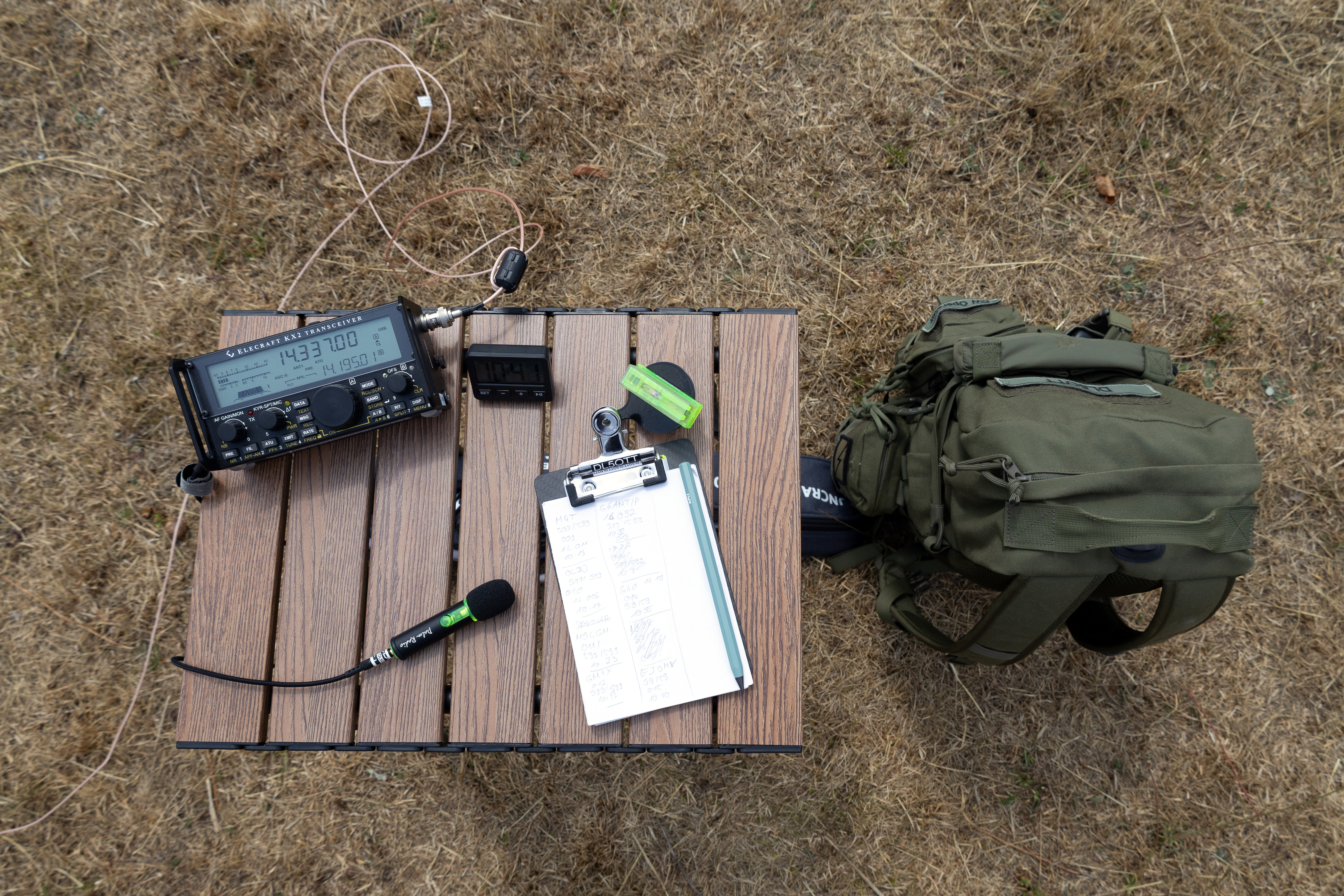
For portable ham radio operations, the antenna is just as crucial as the transceiver. Depending on the situation, I use different solutions—from a simple wire to a compact backpack antenna.
Wire Antenna
Two 7.6-meter-long wires are among my simplest and most flexible solutions. Quick to set up, easy to transport, and surprisingly effective.
Chelegance MC-750
The MC-750 is my go-to vertical antenna for on the go. It really stands out thanks to its quick setup and the fact that it operates without an additional tuner.
Kelemen 5-Band Dipole
For longer operating sessions, I use the Kelemen 5-Band Dipole. It offers good efficiency and enables reliable connections on multiple bands.
Mini Endfed & AX1
When weight is a critical factor, I use the Mini Endfed or the compact Elecraft AX1. They’re ideal for lightweight backpack setups and spontaneous activities.
From a simple wire to a multiband dipole—every antenna has its own place in my portable station.
Power Supply
Off-Grid Power
A reliable power supply is the foundation of any portable radio station. For this purpose, I use various LiFePO4 batteries, selected based on performance and intended use.
Elecraft KX2 Battery
Depending on the operating mode and transmission time, the KX2’s built-in battery allows for approximately 3 to 5 hours of self-powered radio operation.
12V 6Ah LiFePO4 Batteries
I use two compact 12V 6Ah LiFePO4 batteries from Eremit for the KX2 and Xiegu G90. If necessary, these can be connected in series to increase capacity.
12V 50Ah LiFePO4 Battery
For the Yaesu FT-857D, I use a 12V 50Ah LiFePO4 battery, which provides sufficient reserves for operation at up to 100 watts.
From a lightweight QRP setup to a high-power portable station—my power supply is flexibly adapted to my radio equipment.
I do not think that the radio waves I have discovered will have any practical application.
— Heinrich Hertz
Ham radio: Where every contact is a special event!
— Unknow
Contact
Whether you have a question about amateur radio, portable operating, POTA, antennas, or equipment—or simply want to get in touch—I’d be happy to hear from you. Just use the contact form below, and I’ll get back to you as soon as possible.
I always appreciate receiving QSL cards, whether sent directly or via the DARC QSL Bureau. Every QSL card I receive is answered 100% via the same route it arrived. SWL reports are also very welcome and are always answered.
All QSOs made under DL5OTT (excluding DL5OTT/P) are uploaded to Logbook of The World (LoTW).


On Air & Online
Social Media
Amateur radio thrives on communication—not just over the air, but also through digital channels. While you can also find me on QRZ, YouTube, and POTA, my main focus is on Instagram, where I regularly share highlights of my portable radio activities, POTA activations, antenna setups, and experiences in nature.
You are also welcome to get in touch via the contact form below if you have any questions or simply want to say hello.
I always appreciate receiving QSL cards, whether sent directly or via the DARC QSL Bureau. Every QSL card I receive is answered 100% via the same route it arrived.
Follow me on Instagram, QRZ, YouTube, and my POTA profile, and join me on my radio adventures from the great outdoors.